

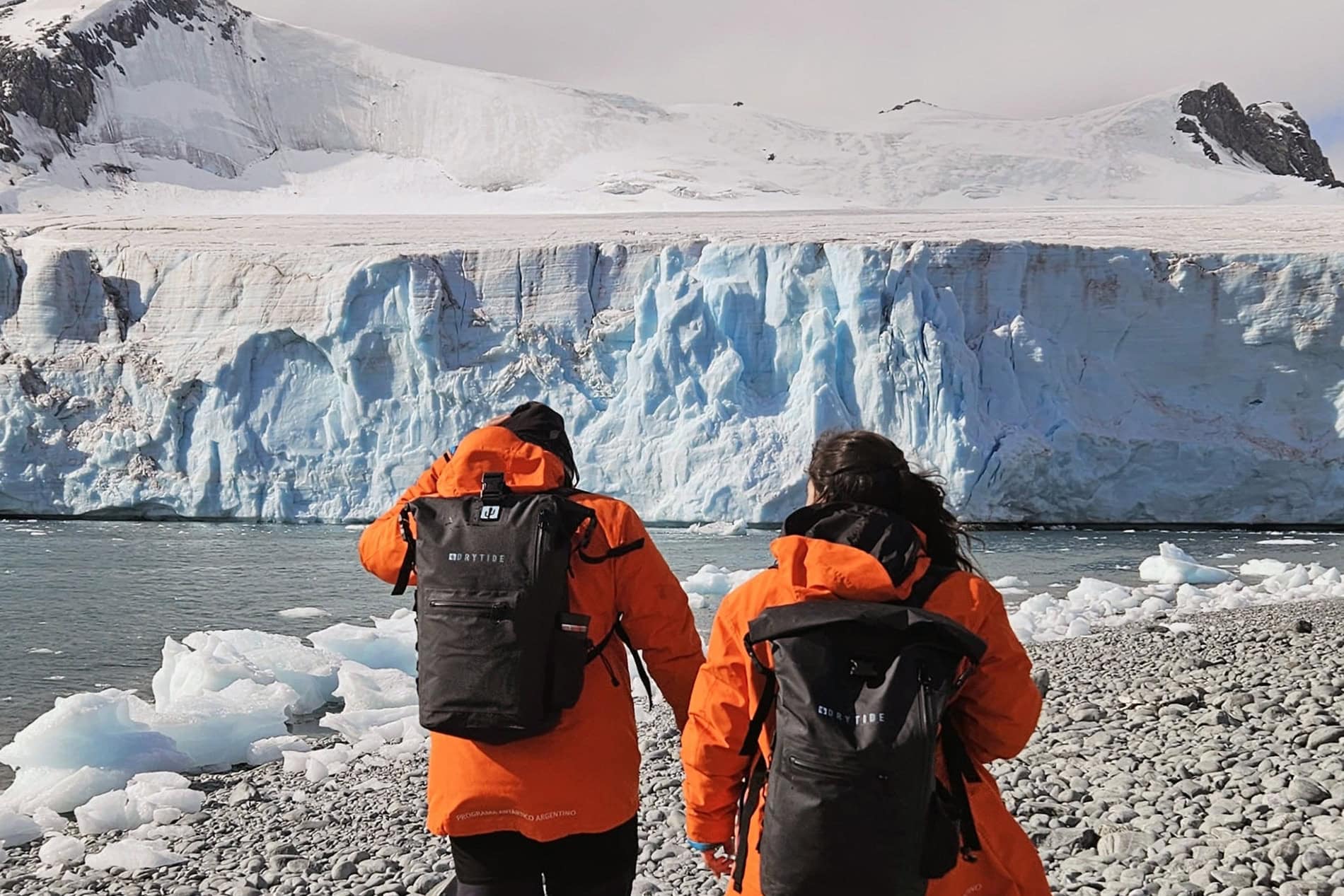
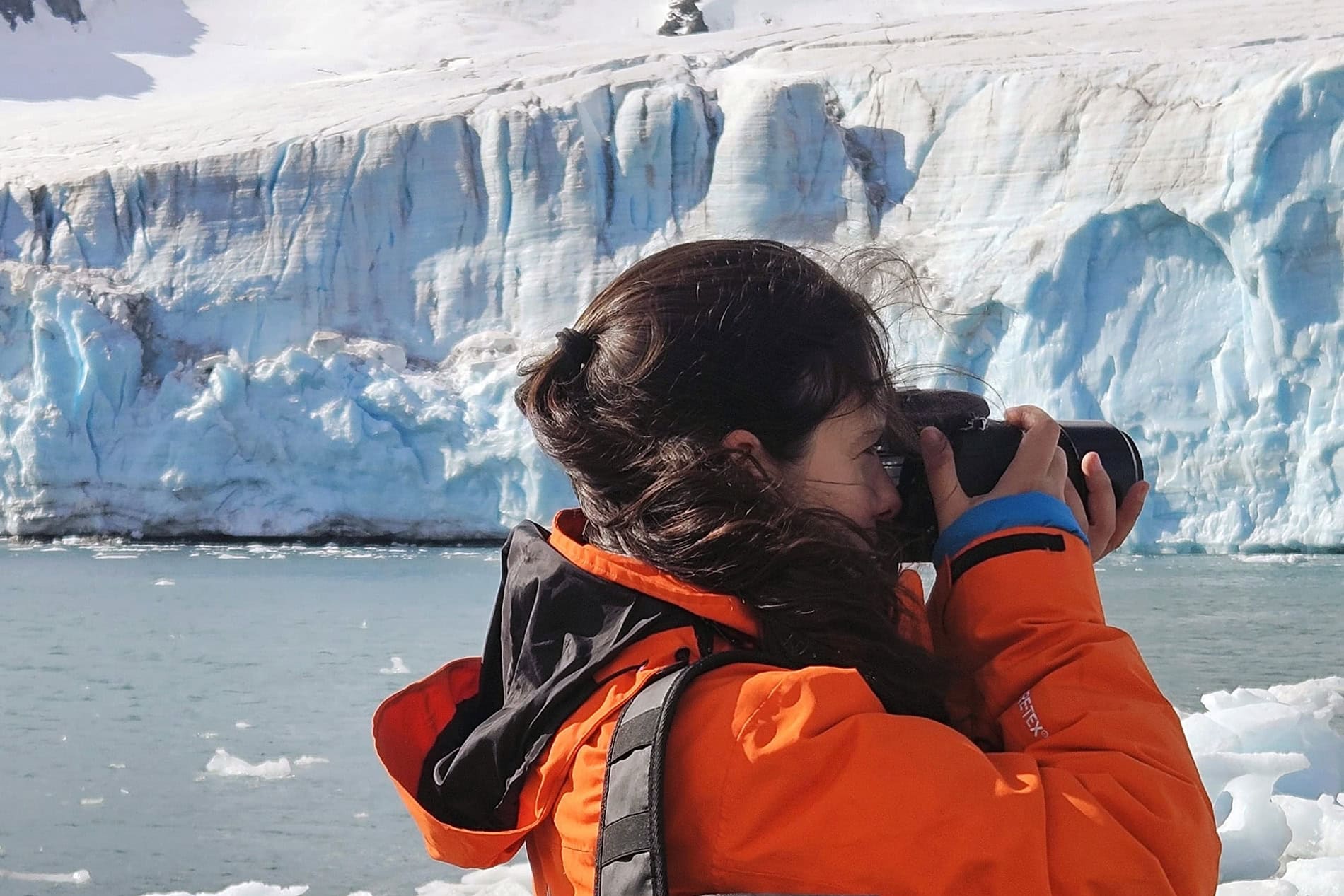
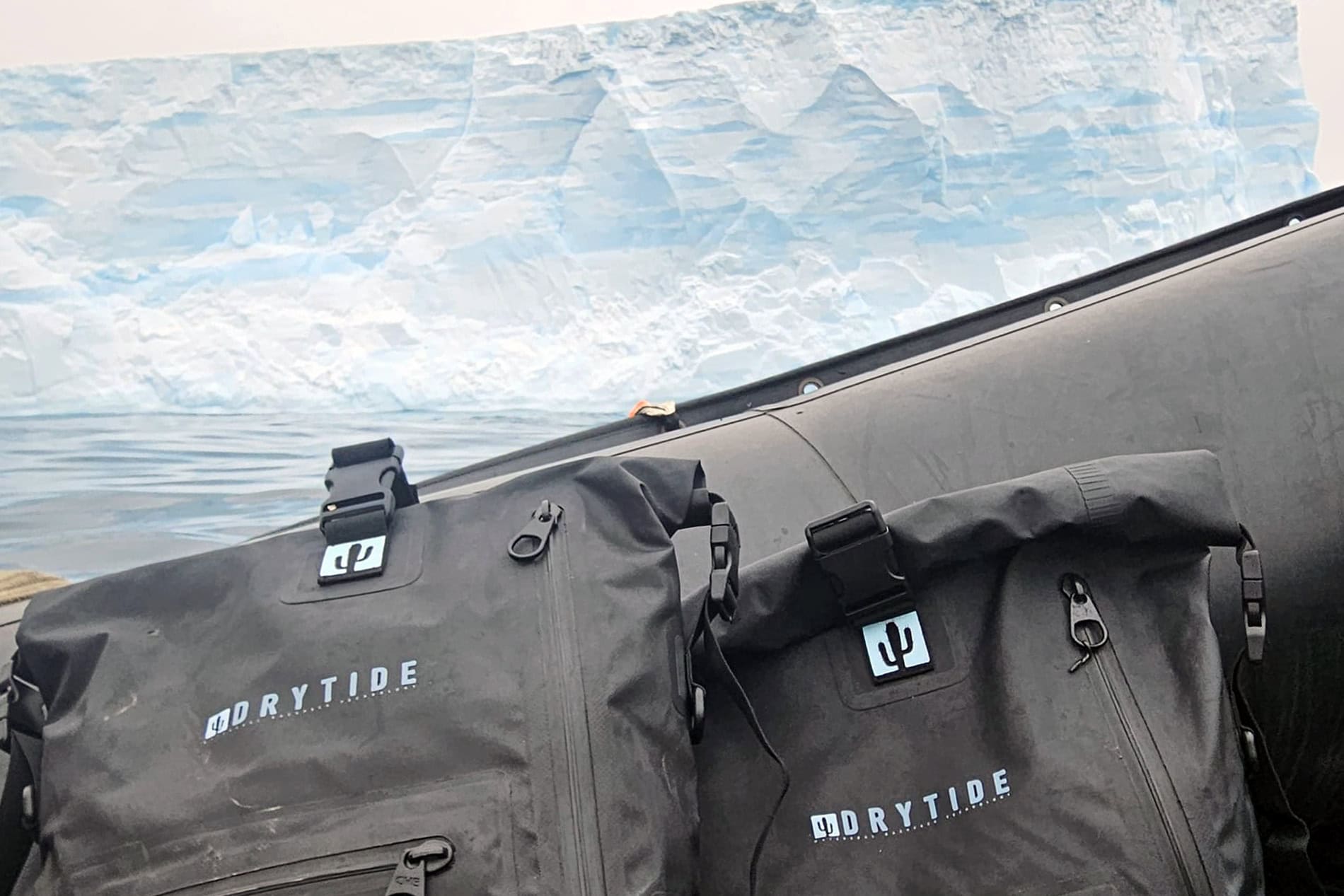
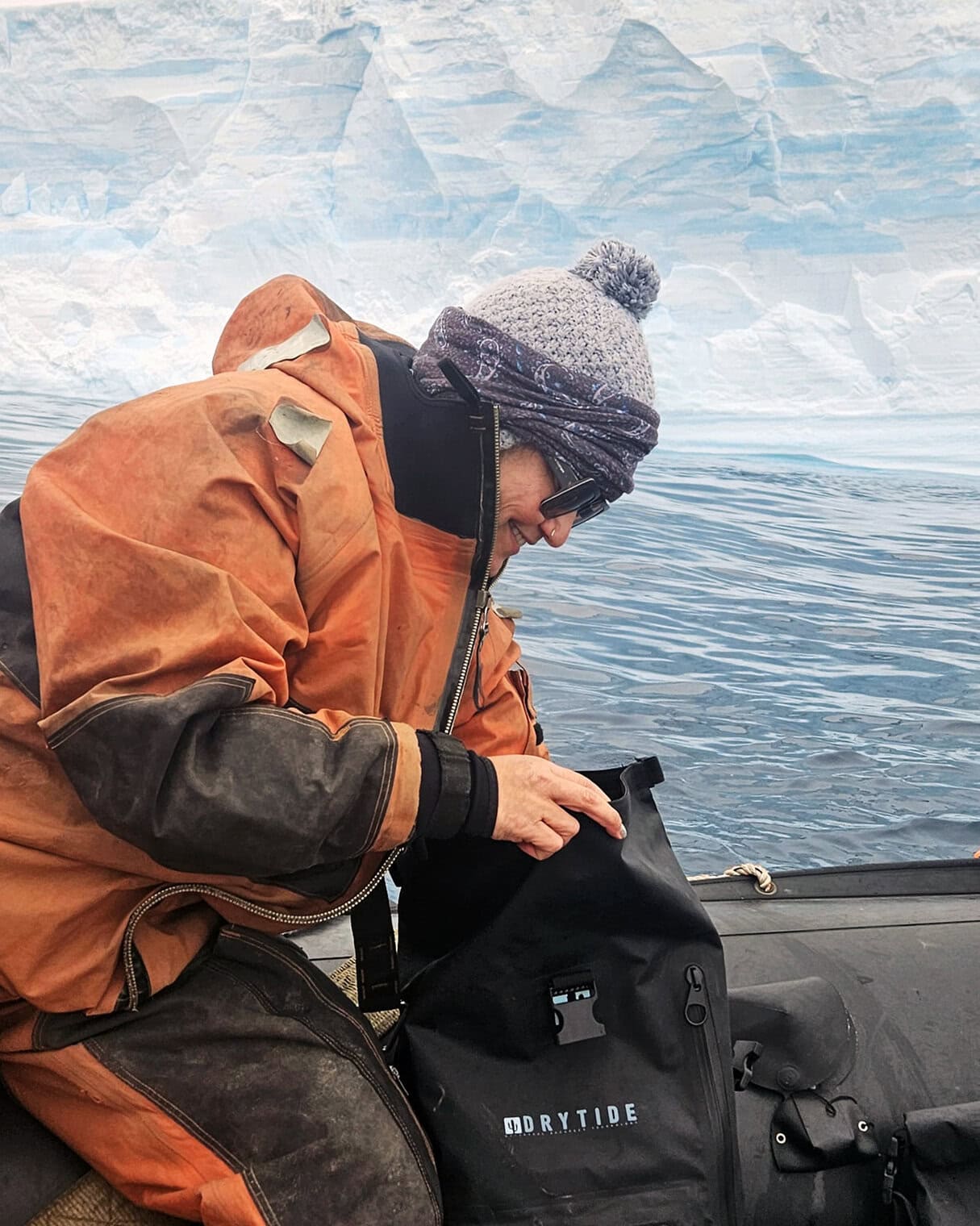
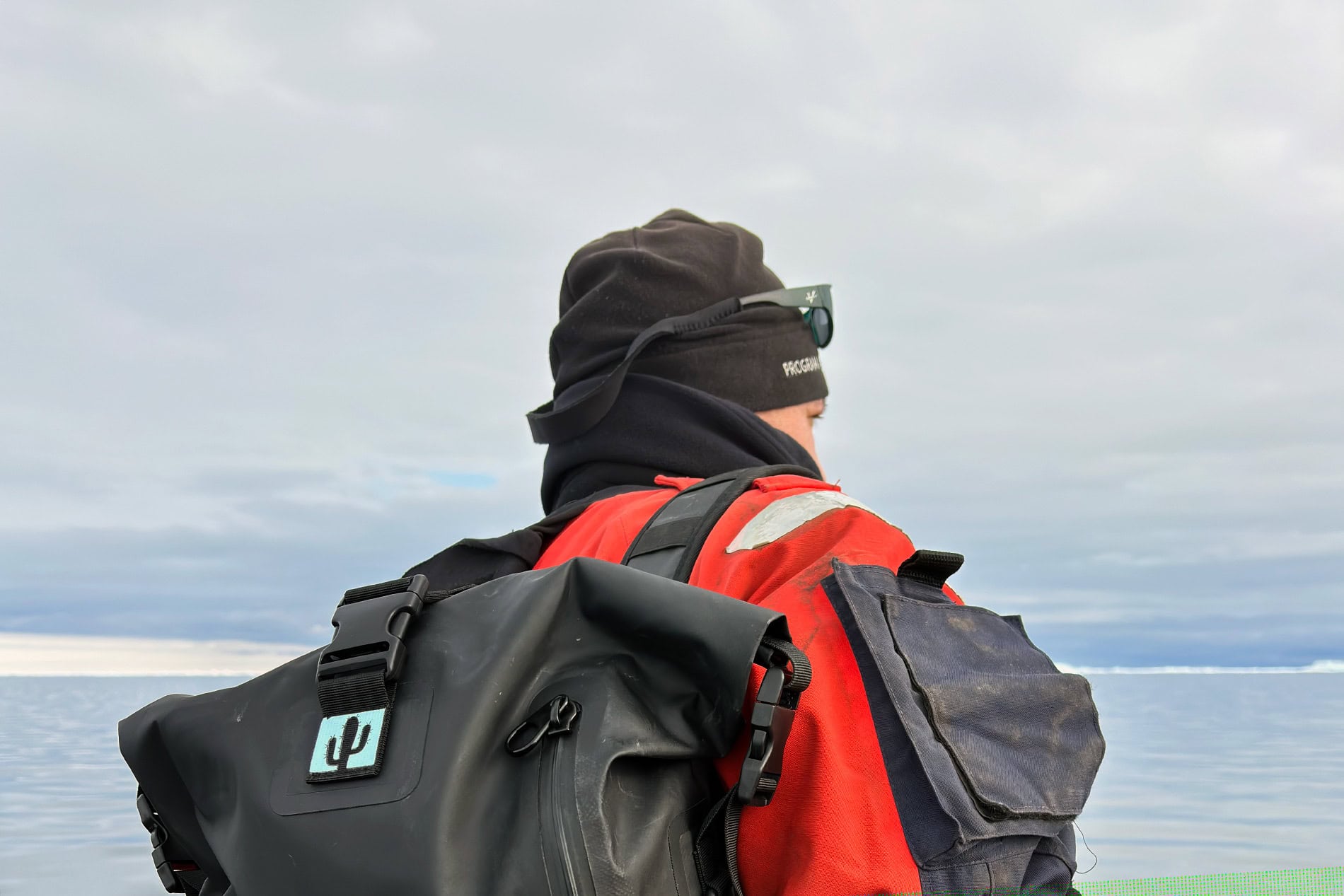
One of the best things about running a waterproof backpack brand is seeing all the incredible corners of the world our gear ends up exploring. The more remote and untamed the destination, the better. It always feels like a small part of us gets to make the journey too.
So when the Cethus Foundation from Argentina reached out and asked whether we’d be willing to support their Antarctica expeditions with a few waterproof backpacks, we didn’t hesitate for a second.
That’s how we met Nicolás.
A few months later, after returning from the frozen edge of the world, Nico sent us a gallery of stunning photos from Antarctica. But great photos are always better when they come with a story. Curious to learn more about life and work among the whales and orcas of the Southern Ocean, we caught up with him and asked a few questions about what it’s really like to chase these magnificent animals in one of the wildest places on Earth.
Hi Nico! Can you please first say a few words about Cethus, what you guys actually do and how your Antarctica expeditions are a part of the larger goal fo the foundation?
Hey! Cethus was founded in 1992 by a group of researchers and specialists from different disciplines, with the goal of researching, raising awareness about, and conserving the dolphins and whales of Argentina. We work around three pillars: research, education, and outreach. They’re expressed individually, but they work in a completely dynamic and interactive way, since without one of them, the other two couldn’t function. The three lines complement each other toward a common goal, the conservation of cetaceans.
To conserve, you first have to understand, and that’s only possible through research. Through that work, we generate knowledge, which we then share with the institutions that issue recommendations and guidelines.
Education is mainly about passing that knowledge on to future generations, the ones who will eventually need to carry this work forward, and that happens through hands-on collaboration with schools and universities.
Outreach ties everything together and makes the activities possible, from participating in international forums to running workshops in schools and seminars at universities.
The Antarctica expedition sits squarely within the research pillar, since it’s where that knowledge gets generated in the first place. What we learn out there then gets transferred through education and outreach toward care and conservation.
But Cethus’s work isn’t limited to Antarctica: the core of what we do is based in Argentina, particularly in Patagonia, where we research, educate, and do outreach year-round.
We also work along the southern coast of Buenos Aires province, in the Bahía Blanca and Bahía San Blas area, what’s known as El Rincón, a stretch that’s still largely unexplored and difficult to navigate, but home to two of the most threatened cetacean species in the South Atlantic.
The Antarctic expedition is one specific, highly visible chapter within the research pillar, but all three lines keep running continuously, expedition or not.
Why Antarctica and how do you pick the time of the expedition, is it connected to weather, whale migration patterns…?
Antarctica became part of our work through SORP, the Southern Ocean Research Partnership, a global collaboration network run within the International Whaling Commission (IWC) that brings together institutions from different countries to study cetaceans in the Southern Ocean. Being able to take part in this is a real privilege for the Foundation, built on years of work toward cetacean conservation in Argentina. That work feeds information to the IWC that supports recommendations affecting cetacean conservation worldwide, and that’s something we’re genuinely proud of, sustaining a commitment to nature that’s now over two decades old.
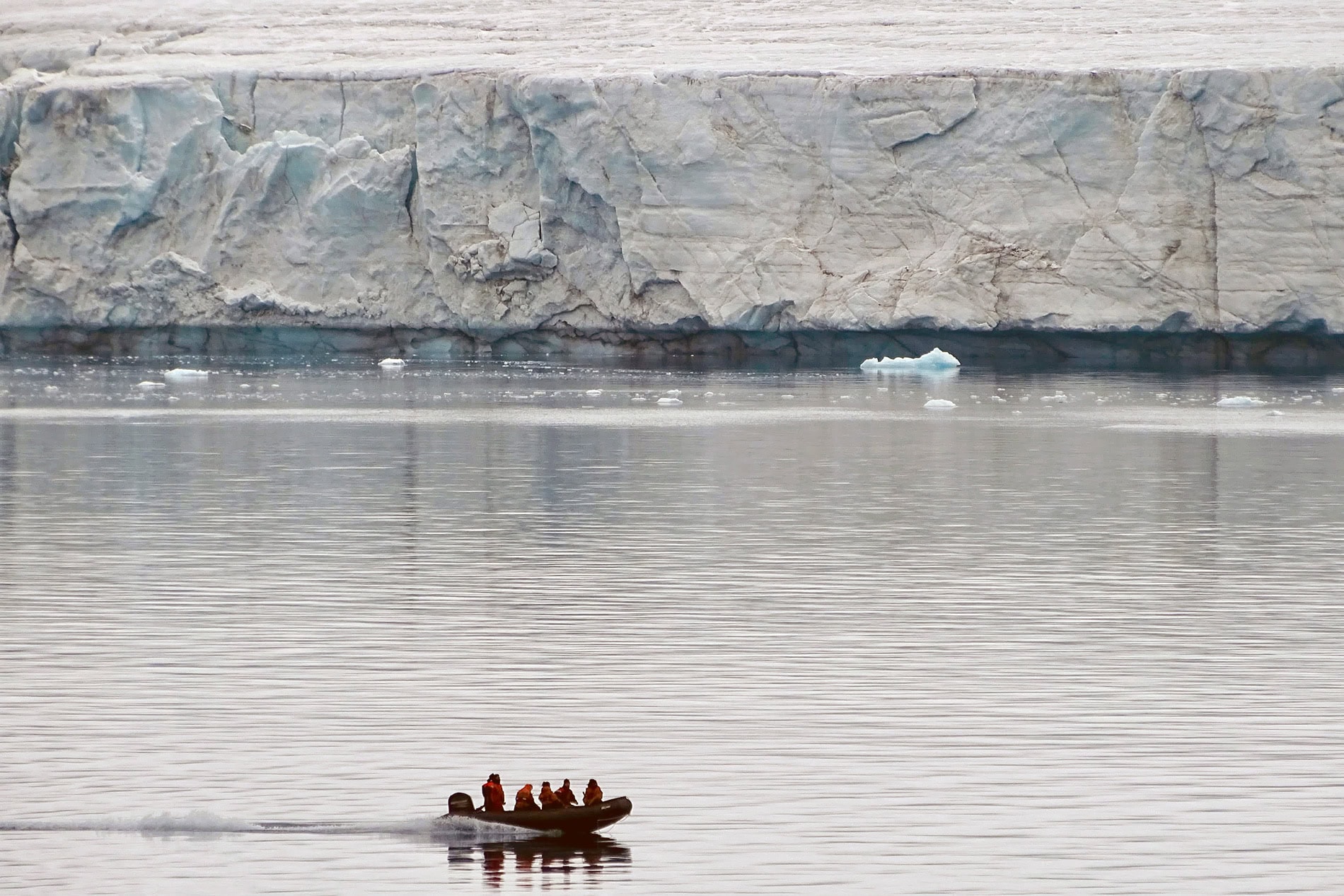
As for timing, it actually comes down to both, weather and whale migration patterns. Summer is when the whales themselves are in Antarctica to feed on krill, so that’s when there’s something to study in the first place, but it’s also the only stretch when weather and ice conditions allow safe navigation and work in the region.
The operating window is short, from November to March, and outside it, ice and weather make it harder to operate at all. Everything depends on the ship, which works simultaneously as laboratory, transport, and shelter, so any equipment failure, weather issue, or logistical problem doesn’t get a second chance until the following season.
That tight margin is also why coordination between institutions and countries has to be so precise.
Speaking about weather, what is it like and how bad can the weather and sea conditions get?
In the Southern Ocean rough seas aren’t the exception, they’re routine. The wind regularly generates sea states that limit deck work and equipment deployment, so good days are genuinely hard to come by. Sea ice adds another layer of unpredictability, an open patch of water can close up within hours, and the extreme cold takes a toll on batteries, electronics, and materials.
The toughest I’ve seen it, we had swells over six meters and the ship was rolling so much that monitoring got cancelled for safety and we basically had to lie down in our cabins, walking through the corridors felt like an extreme sport. On other days the wind chill dropped so low that you couldn’t last more than a couple of minutes outside, I learned that the hard way trying to take photos without gloves, my fingers went numb so fast I could barely get them to press the shutter.
You told me that you use special underwater microphones – hydrophones to search for animals in the area?
We use two methods to record cetaceans acoustically. While the ship is sailing, we tow an array of six hydrophones about 150 meters behind the stern, deployed with an oceanographic winch, and the signals get recorded and monitored in real time so we can confirm positive detections as they happen.
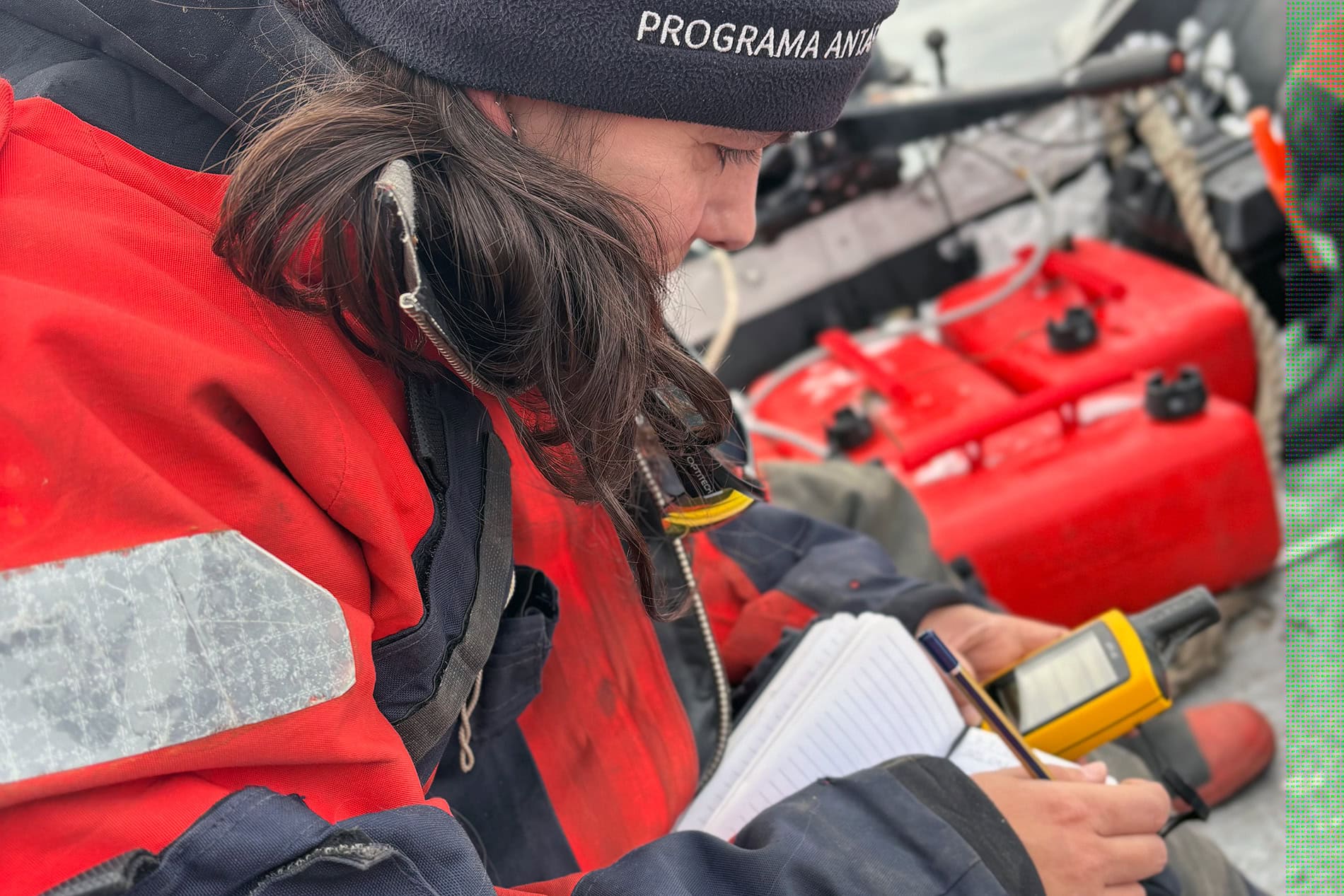
When the ship isn’t sailing, we switch to a handheld hydrophone deployed from a smaller boat at different georeferenced points, to acoustically scan the area. The acoustic part is mainly about catching presence we’d otherwise miss, animals that are vocalizing but aren’t in visual range, and when you cross that with behavioral observations you start getting a picture of how the area is actually being used.
On range, it’s true that some whale calls, especially the low-frequency ones, can travel very long distances underwater, though exactly how far depends a lot on the species, the call type, and ambient noise conditions, so it’s not a fixed number. Different species do have distinct call signatures, so acoustic detections can often be attributed to a species. Recognizing individual animals is a different story though, that’s mostly done visually, through photo identification of markings like a humpback’s fluke pattern, which can then be checked against catalogs to see if that same individual has been recorded elsewhere in the hemisphere.
Roughly 70 percent of a cetacean’s life happens underwater, and most species are highly vocal, which is exactly why acoustics works so well as a complement to visual methods rather than a replacement for them.
All of this data, once a campaign wraps up, goes into reports for the Instituto Antártico Argentino, the IWC, and other partner institutions, and it also feeds into thesis work and professional practice for biology and sound engineering students from Argentine universities. Beyond the science itself, it’s data that can support reviewing existing regulations or pushing for new ones, since it offers a continuous picture of how different species and areas are doing over time.
Can you talk a bit about the species that you observe?
In the Southern Ocean the signature species are the Antarctic blue whale, humpback, fin, minke, and sperm whale, plus orcas with some very specific regional ecotypes. The orcas are actually where I’d put the spotlight, there are several Antarctic ecotypes, type A, B, C, and D, and they hunt in radically different ways from each other, something that’s still very much being studied.
Funny enough, for some reason we haven’t figured out yet (and honestly, it’d make a great research topic of its own), orcas generate a kind of fascination in people that no other cetacean does. It’s always entertaining to see how everyone on the ship, even people working in totally unrelated areas, gets desperate to spot them, constantly asking if we’ve seen any or where they might show up, and asking us to let them know the moment we do.
As for a memorable sighting, there was one time, well south in the Weddell Sea, when we crossed paths with a group of about ten orcas right at dawn. The water was completely glassy, like a mirror, and with that soft early light at those latitudes, seeing them glide through it felt almost magical, like they were welcoming us to the southernmost sea.
What is the state of dolphin and whale populations?
Many populations are still recovering from industrial whaling in the twentieth century, and in some cases that recovery has been slow and incomplete, to the point that we don’t fully understand yet why certain populations haven’t bounced back the way others have. That’s actually one of the open questions driving a lot of the research happening down there right now.
Their importance in the ecosystem is huge. Cetaceans sit at the top of the marine food chain and play a fundamental ecological role. They are important ocean fertilisers, transporting nutrients during their long migrations from high to low latitudes and from deep waters to the surface. They’re also true sentinels of the ocean, their health and behavior can flag damage caused by human activity, like pollution or overexploitation of resources, sometimes even before we’d notice it through other means. Their complex behavior and advanced communication only add to how scientifically and environmentally valuable they are.
As for what we can do, it comes down to reducing the human impact on their habitat, supporting research that informs real protection measures like marine protected areas, and backing the international cooperation that this kind of conservation requires, since these are migratory species that cross borders and no single country can look after them alone. Studying them, protecting them, and learning to coexist with them isn’t just a privilege, it’s a responsibility.
Can you describe your typical day onboard the ship from first light to the last check-in? Expeditions like that sound super exciting to all of us more adventurous souls but it must also be demanding and I bet it also has its downsides. Can you tell me what are the best parts of working there and what are the worst?
In Antarctic summer there’s barely a “first light,” the days are almost endless, so the rhythm of the day is set more by the clock than by sunrise. While we’re sailing, the day runs in dynamic twelve-hour shifts built around four observation posts that rotate every thirty minutes, two of them outdoors on the observation decks and two sheltered inside, which lets us recover before going back out. The only real breaks in that rhythm are for meals.
When the ship anchors near a base to resupply, the whole structure changes and we switch to acoustic surveys by boat instead, going out for stretches of around four hours, more exposed to the cold but lighter in terms of duration and intensity. The last check-in of the day is cleaning all the equipment we used, the hydrophone, cameras, binoculars, goggles, and putting the batteries on charge so everything is ready to go again the next morning.
The best part, hands down, is the teamwork. Working in a hostile environment like Antarctica only works if you do it as a team, and that builds a sense of family that’s pretty particular to every science group down there, no matter what they’re actually researching. There’s also something special about being part of an international effort that’s bigger than any one of us, and getting moments like watching a pod of orcas glide through glassy water at dawn makes the whole thing worth it.
The worst part is the physical toll, the cold, the rough seas, being confined to your cabin for safety when the ship is rolling too hard to move around, and being away from home for long stretches with no way to course correct if something goes wrong, since there’s no second chance until the next season. It’s demanding in a way that’s hard to fully explain unless you’ve lived it, but it’s also exactly what makes it worth doing.
What was your best Antarctica meal ever?
At the end of every campaign, the ship puts together a special closing meal and a toast, and that’s always one of the best meals you’ll have out there. This time around it was pork sandwiches with a bunch of different sauces, all really good, and the best part is there’s usually plenty of everything, so you end up building a different sandwich with each sauce just to try them all.
How many times have you been on an Antarctica expedition? Were you nervous before going there the first time? What surprised you most about Antarctica once you were actually there (or it still surprises you today)?
I’ve been on three Antarctic austral summer fieldworks so far, each one lasting roughly two to three months. I’ve always gone aboard the ship, though I did get the chance to set foot on the continent itself at different points along the way.
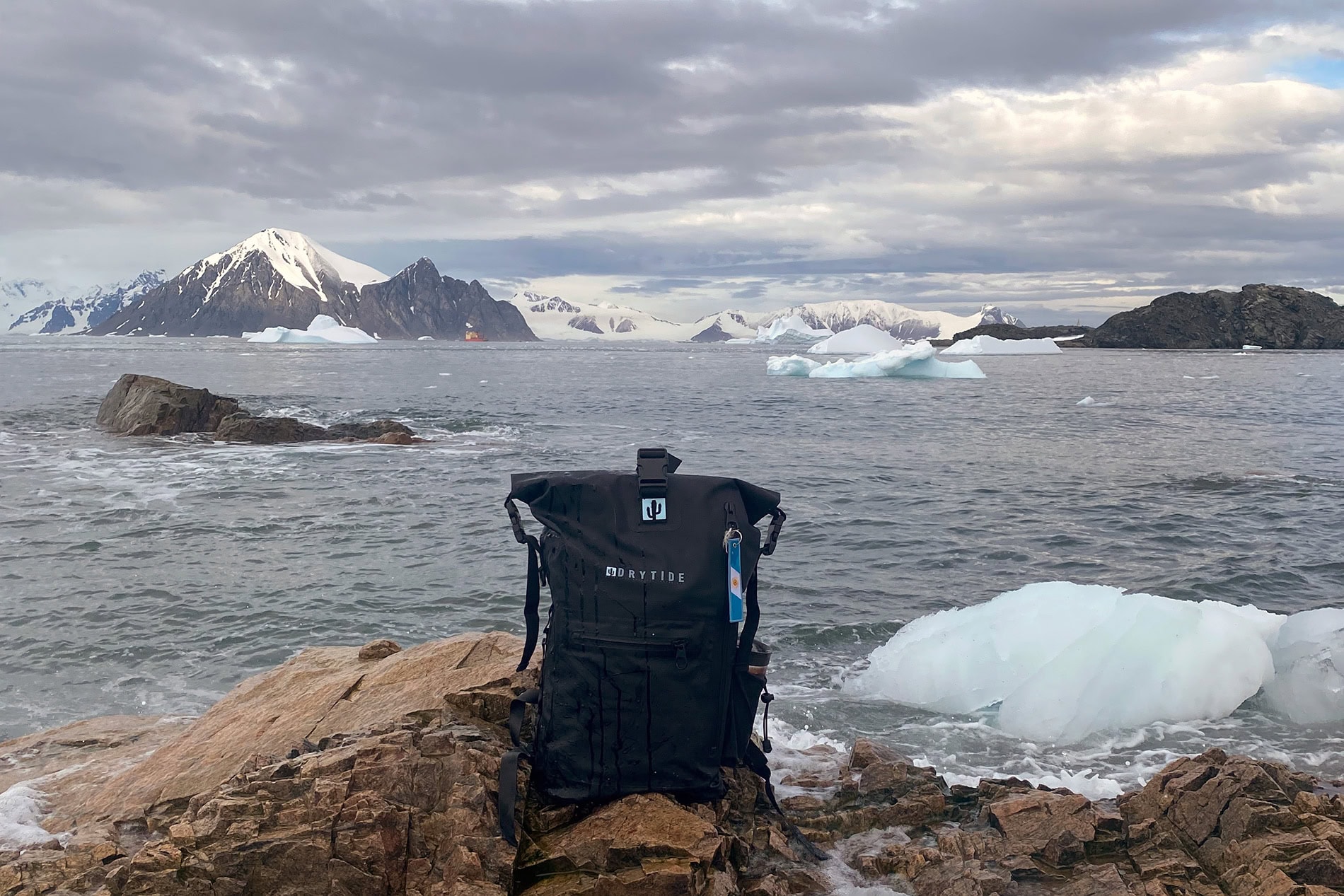
One thing that still surprises me is the sheer geographic diversity, even within Antarctica itself. Argentine bases sit in really different settings, some on elevated plateaus, some on islands well off the mainland, others perched on a hilltop, others tucked into coves or bays. You don’t expect that much variety in one place.
But what’s most surprising, even after multiple trips, is the sheer scale and pristine state of the Antarctic ecosystem, with all the wildlife diversity that goes with it, which is exactly what we’re there to help protect. No matter how many times I’ve gone, there’s always a moment where I just stop and take in the landscape, almost trying to process where I actually am, and it gets to me every time. In those moments I sometimes feel this strong, almost frustrated urge for everyone in the world to be able to experience this place, just so they could understand how incredible this planet is and how important it is to take care of it.
If you had to describe Antarctica in one sentence for someone who loves the outdoors?
Antarctica is the closest you’ll ever get to a place the planet hasn’t broken yet, so vast and untouched it humbles you into silence and makes you want to fight for it.
How do you prepare before going there?
We go through several medical exams beforehand, checking pretty much everything, since any health issue down there can quickly turn into a serious problem given how isolated you are. Mental preparation is something that gets easier over time, once you’ve built up the tools from experience, but the first few times you really rely on talking to people who’ve already been and asking every question you can think of.
As for what you absolutely have to pack, anything that keeps you entertained during downtime is essential, books, board games, downloaded movies, since the internet connection out there is pretty much unusable. A thermal mug and a multitool are probably the two personal items I end up carrying on me the whole time. And it’s worth bringing some good food you won’t find on the ship, nice chocolates, candy, your favorite cookies, dried fruit and nuts, that kind of thing.
Where can we follow your and Cethus’ work or learn more about your activities?
Cethus web: https://www.cethus.org/index.html
Cethus IG: @fundacion_cethus
My IG: @acusticaenelmar @nicovalese
If there is anything that you would like to add please feel free to do so!
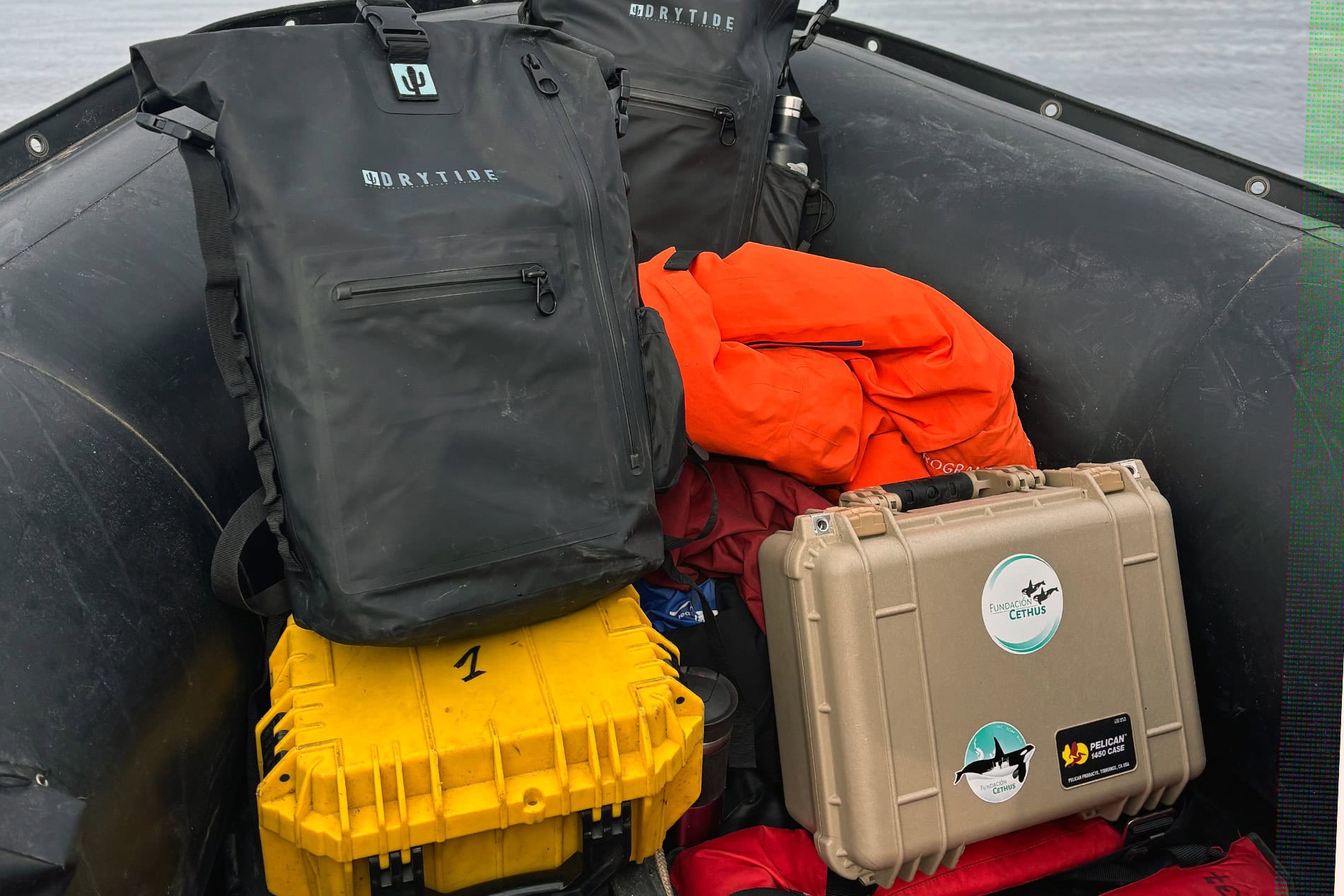
One thing I’d like to add is that, being an NGO in South America, it’s genuinely hard for us to get our hands on the equipment we need, and funding for our projects in general is just as hard to come by. That’s part of why contributions like the one from Dry Tide matter so much to us, having quality backpacks that protect and let us safely transport our equipment in the field is fundamental for what we do. We’re really grateful for the support.
We’d also like to thank the institutions and people that make this work possible: the DNA (Dirección Nacional del Antártico, Argentina’s national Antarctic authority), COCOANTAR (Comando Conjunto Antártico, the joint military command that coordinates Antarctic operations), the IAA (Instituto Antártico Argentino, the scientific body that oversees Argentine research in Antarctica), and the crew of the RHAI (Rompehielos ARA Almirante Irizar, the icebreaker that serves as our base of operations in Antarctica). Without their support, none of this would be possible.
Thank you Nico, and good luck on your future expeditions!
Love cold adventures? Check out our surf trip to the Arctic Circle.


Hey there, a great interview you and Nico did and u2be link is even more awesome. I’m looking forward to many more exciting interviews and site reports.
Great work!