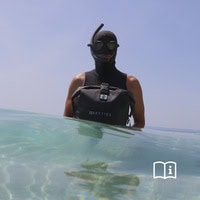
A practical guide that explains the difference between dry bags and waterproof backpacks
When you need to keep your gear dry, you might be wondering whether you need a dry bag or a waterproof backpack. Both protect your gear from water, but they are designed for different purposes. The key difference is how you want to carry and use your gear.
KEY DIFFERENCES
| Dry Bag | Waterproof Backpack | |
|---|---|---|
| Main purpose | Waterproof storage | Waterproof storage + backpack carrying system |
| Waterproof protection | Waterproof when properly closed | Waterproof when properly closed |
| Construction | Simple and flexible | More structured backpack construction |
| Carrying system | Simple removable shoulder strap or handle | Fixed padded backpack straps, hip belt, sternum strap and padded back |
| Organisation | One simple compartment | Multiple pockets and compartments |
| External features | Minimal | Pockets, straps and attachment points |
| Inside another bag | Excellent | Usually not practical |
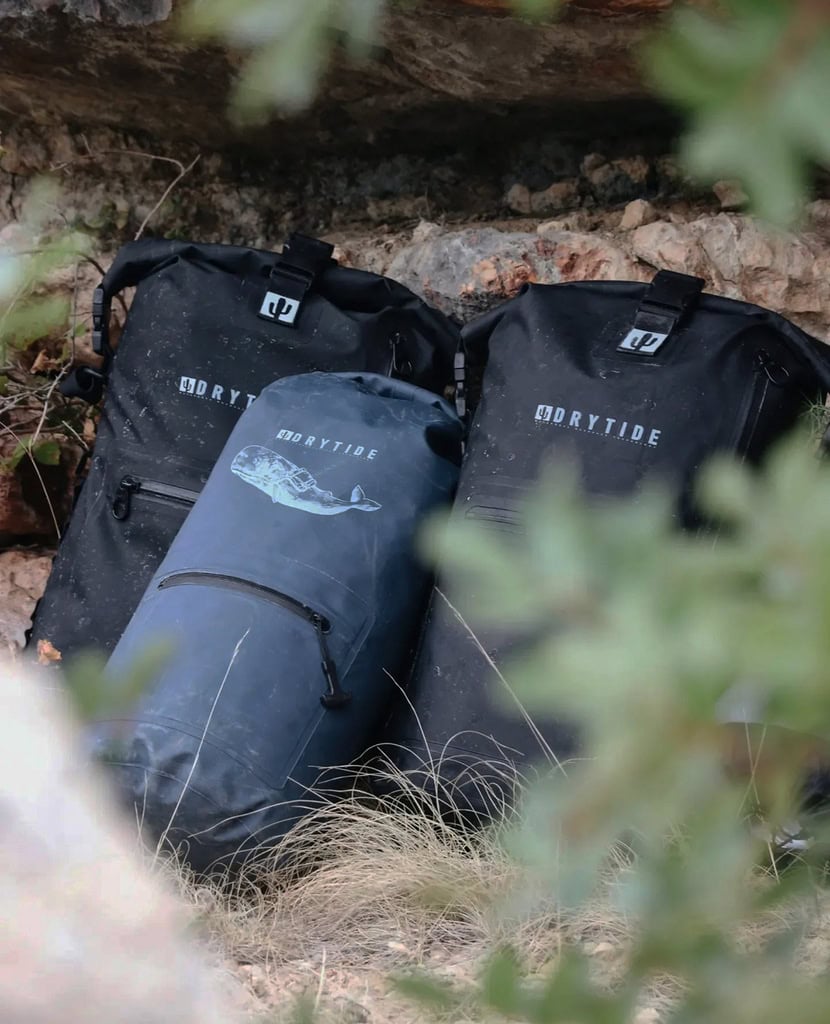

WHEN SHOULD YOU CHOOSE A DRY BAG?
A dry bag is the right choice when you mainly need waterproof storage rather than a complete backpack carrying system.
- You only need waterproof storage. A dry bag keeps specific gear protected without the extra structure of a backpack.
- You already have a backpack or another bag. A dry bag can simply become the waterproof compartment inside your existing setup.
- You want to separate wet and dry gear. Keep clothes, electronics or other sensitive items protected from wet equipment.
- You want flexible packing. The roll-top design allows the bag to adapt to different amounts of gear.
- You don’t need to carry the bag around. Pack it, put it where you need it and leave it there.
- You want to save space. Its simple, flexible construction fits easily into tight spaces.

WHEN SHOULD YOU CHOOSE A WATERPROOF BACKPACK?
A waterproof backpack is the right choice when you want waterproof protection together with a proper backpack carrying system.
- You want to keep your hands free. Carry your gear comfortably on your back.
- You’ll be carrying the bag for longer periods. Padded straps, a padded back and a hip belt make carrying a loaded bag much more comfortable.
- You want to stay active while carrying your gear. Ergonomically shaped shoulder straps, a hip belt and sternum strap keep the backpack securely in place while you hike, run, climb, trek, cycle, jump or take on other outdoor adventures.
- You want one bag for all your gear. Pack clothes, electronics and other essentials together instead of splitting them between several dry bags.
- You like to keep your gear organised. Pockets and compartments make it easier to find what you need.
- You want a bag that works for everyday use too. DryTide backpacks look and feel like regular backpacks, but with waterproof protection. Unlike some technical-looking or rubbery waterproof backpacks, they don’t feel out of place around town or at work.
WHAT ABOUT A DRY BAG INSIDE A BACKPACK?
You don’t always have to choose between the two. A dry bag inside a waterproof backpack can be useful for organising gear inside the main compartment and for giving particularly sensitive items an extra layer of waterproof protection.
IS A DRY BAG MORE WATERPROOF THAN A WATERPROOF BACKPACK?
Dry bags and waterproof backpacks are both made from waterproof materials, with high-frequency welded seams and a closure system designed to keep water out. So when comparing a dry bag and a waterproof backpack of similar quality, there usually isn’t a big difference in overall waterproof protection. The main difference is the type of closure they use.
All DryTide dry bags (and most dry bags in general) use a roll-top closure.
Waterproof backpacks mainly use two types of closure systems, depending on the model: roll-top and waterproof zipper. The DryTide 18L, 30L and 50L backpacks use a roll-top closure, while the Point Nemo uses an airtight waterproof zipper.
Both closure systems provide very good protection from water, but the airtight zipper has a slight advantage in more extreme situations, such as when the bag is pushed or held underwater.
SO WHICH ONE SHOULD YOU CHOOSE? THE SIMPLE RULE
Dry Bag = waterproof storage. Waterproof Backpack = waterproof storage + backpack carrying system.
Neither is universally better. They solve slightly different problems. If you mainly need a waterproof container for your gear, start with a dry bag. If you want a bag that you can comfortably carry on your back and use as your main or backup travel backpack or as an everyday pack, a waterproof backpack is the more natural choice.
If you have enough space when packing your gear, a waterproof backpack is the more versatile option. Dry bags are more practical when you need to fit your gear into tight spaces, such as inside a kayak or among other equipment. If space isn’t a concern, the backpack is a better choice because you can also carry your gear comfortably on your back.
If you spend a lot of time around water, you will find that having both gives you the most flexible setup.